
Spinbit casino Plinko
Introduction
When I look at Spinbit casino Plinko, I see a format that appears almost too simple to deserve serious analysis. A ball drops from the top of a pegged board, bounces left and right, and lands in a payout slot at the bottom. That is the entire visual idea. Yet in practice, Plinko creates a very specific kind of gambling session: fast, clear, highly reactive, and often more psychologically intense than many players expect before the first drop.
That contrast is exactly why the game deserves attention. On the surface, Plinko is easy to understand within seconds. But once I examine how stake size, risk level, row count, hit distribution, and multiplier spread interact, it becomes obvious that this is not just a casual novelty. It is a probability-driven casino game with a strong rhythm, a distinct volatility profile, and a style of engagement that differs sharply from classic online slots.
For players in New Zealand exploring Plinko at Spinbit casino, the key question is not whether the interface looks entertaining. The real question is what the game actually offers over a session, how its logic works under the hood, and whether that style of randomness fits the way they like to play. In this review, I will stay focused on that practical side: what Plinko is, how it behaves, where the tension comes from, what the risks are, and who is likely to enjoy it. Table game fans will get more out of this review after reading best withdrawal times information for Spinbit Casino players.
What Plinko is and why it attracts so much attention
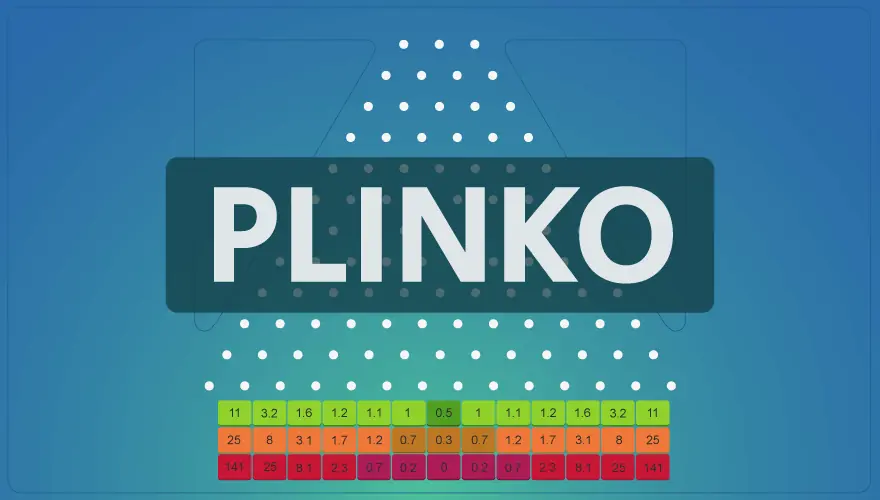
Plinko is a chance-based casino game built around a vertical board filled with pegs. The player chooses a stake, usually selects a risk setting, and often adjusts the number of rows. After that, a ball is released from the top and deflects across the board until it lands in one of several payout zones. Each zone carries a multiplier, and that multiplier determines the result of the round.
The reason Plinko stands out is not complexity. It stands out because it compresses suspense into a very short sequence that the player can visually follow. In a slot, most of the logic is hidden behind reels, symbols, and internal math. In Plinko, the event feels visible. You watch the ball change direction peg by peg, and that creates the impression that every tiny bounce matters. Mathematically, the result is still governed by random generation, but the path creates a stronger sense of live uncertainty.
I think that is one of the most important observations about the game: Plinko feels transparent even when the outcome is fully random. That feeling is powerful. It gives players a sense of closeness to the result that many other Spinbit Casino games with terms and limits do not deliver in the same way.
Another reason for the game’s visibility is pacing. A round is over quickly. There is no long animation cycle, no bonus intro, no feature build-up, and no need to wait through multiple reel transitions. That makes Plinko especially noticeable among players who prefer instant feedback. It also explains why the game has become a frequent choice for streamers and high-tempo sessions: it produces a lot of outcomes in a short period, and every drop is easy to read.
How the Plinko system works in practical terms
To understand Spinbit casino Plinko, it helps to break the session into its real working parts rather than just describe the board. In most versions, the player interacts with four main variables: stake amount, number of rows, risk level, and manual or automatic drop mode. Those settings shape the session much more than the visual design does.
The board itself is arranged so that the ball encounters a series of pegs on the way down. At each contact point, it shifts left or right. Over many rounds, this creates a distribution where central slots are usually hit more often, while outer slots are less frequent but often carry larger multipliers. This is one of the core ideas behind the game. The biggest returns are generally placed where the ball is least likely to finish. For a closer look at the games library, Spinbit Casino coupons with terms and limits sorts the titles by theme and pace.
That means the layout is not arbitrary. It is built around distribution. Lower-value outcomes tend to cluster in more common landing areas, while rare edge positions hold the more dramatic multipliers. As a result, the game can produce long stretches of modest returns before a high-end result appears, especially at elevated risk settings.
In practical use, the player is not “controlling” the path of the ball. That is worth stating clearly. The visual movement may look physical, but the result is determined by the game’s random logic. The board is a representation of that logic, not a skill challenge. This matters because some first-time users assume that release position or timing can influence the outcome in a meaningful way. In legitimate online Plinko, that is not how the game is designed.
| Element | What it changes | Why it matters in a real session |
|---|---|---|
| Stake size | The value of each drop | Directly affects bankroll pressure and how long a session can last |
| Risk level | The multiplier distribution | Higher settings usually mean more extreme outcomes and longer dry spells |
| Row count | The number of bounce points and payout spread | Can widen the range between common results and rare top multipliers |
| Auto mode | Speed and repetition | Increases volume quickly, which can accelerate both gains and losses |
One detail that often gets overlooked is how row count changes the emotional texture of the round. More rows do not just make the ball travel longer. They make the path feel more eventful, while often increasing the separation between ordinary outcomes and exceptional ones. So even if the interface still looks simple, the session can become much sharper in tone.
Why the game feels engaging and how its tempo affects decision-making
Plinko is engaging because it combines short-cycle suspense with visible motion. The player does not simply press a button and wait for a static result. There is a brief, trackable journey between wager and outcome. That tiny delay matters. It creates anticipation without slowing the game down too much.
In my experience, the tempo of Plinko is one of its defining traits. It can feel relaxed in manual mode with small stakes, but it can also become extremely fast once auto-play or repeated drops enter the picture. This is where many players misread the game. Because each round is visually simple, they assume it is mentally lighter than a slot. In reality, the fast result cycle can make it more demanding on discipline.
Plinko has a deceptively low-friction interface. There are few menus, few symbols to interpret, and no complicated paytable to memorize. That sounds beginner-friendly, and in some ways it is. But it also removes natural pauses. With fewer interruptions, players can place many rounds in a short window without fully noticing how quickly exposure is building.
This creates a session style that is very different from feature-heavy slots. A slot often has dead spins, bonus anticipation, scatter chases, and changing reel states. Plinko strips most of that away. The excitement comes from repetition, distribution, and the possibility that the next drop lands at the edge rather than in the middle. That can be compelling, but it can also become repetitive for players who want evolving content rather than pure outcome tension.
One of the clearest practical observations I can offer is this: Plinko does not create excitement through variety; it creates excitement through concentration. The whole experience is focused on one recurring event, and whether that works for a player depends heavily on personal taste.
Risk levels, probability patterns, and who should treat the game carefully
Risk settings are central to understanding Plinko. They do not merely make the game “safer” or “wilder” in a vague sense. They reshape the payout map. Lower-risk configurations usually compress outcomes toward more frequent, smaller multipliers. Higher-risk configurations typically widen the spread, reducing the frequency of stronger returns while increasing the size of the top-end potential.
For the player, this changes the entire feel of the session. On low risk, the board may produce more stable-looking sequences, though that does not mean guaranteed profit or even steady recovery. On high risk, the session can become swing-heavy very quickly. You may see many low-value landings interrupted by occasional larger hits, and the timing of those hits is impossible to predict.
That is why Plinko can be more volatile than it first appears. The board looks playful. The math can be harsh. If a player chooses an aggressive risk level and pairs it with large stakes or long auto-drop sequences, bankroll drawdown can happen faster than expected.
Here is the practical takeaway: players who enjoy sharp variance, quick resolution, and visible suspense may find Plinko very appealing. Players who prefer extended bonus rounds, layered features, or a slower entertainment curve may find it too repetitive or too abrupt.
- Low-risk Plinko tends to suit players who want more frequent smaller returns and a less jagged session profile.
- Medium-risk Plinko often works for players who want some balance between hit frequency and occasional stronger multipliers.
- High-risk Plinko is better suited to users who understand that long quiet stretches can happen before any notable result appears.
I would add one more point that matters in practice: high risk can look attractive because the top multiplier is visible on the screen. But visible is not the same as realistic. The outermost rewards are usually rare by design, and treating them like expected outcomes is one of the quickest ways to misread the game. Table game fans will get more out of this review after reading Spinbit Casino chicken road before making a deposit.
What to understand about session rhythm, distribution, and possible outcomes
Before launching Spinbit casino Plinko, a player should understand that this is a distribution-based experience, not a progression-based one. There is no storyline, no reel development, and no bonus state that gradually unlocks. Each drop is a discrete event. The session is built from repeated independent outcomes.
That has two consequences. First, Plinko can be easy to enter at any moment because there is little to learn. Second, it can encourage pattern-seeking where no reliable pattern exists. After a sequence of central landings, some players start feeling that an edge result is “due.” That is a classic mistake. Previous drops do not create a debt that the board must repay.
This is where the game’s visual design can be slightly misleading. Because the ball path is visible, the human brain wants to read momentum into it. But the correct way to approach the game is to treat each round as a fresh random event shaped by the selected settings.
From a bankroll perspective, the most important factor is not whether one drop can pay a large multiplier. It is how many drops a player plans to make, at what stake, and under which risk setting. That combination determines the practical pressure of the session far more than any single highlight outcome.
| Session factor | Common player assumption | What usually matters more |
|---|---|---|
| Big top multiplier | A major hit is likely to arrive soon | Its rarity and how long the bankroll can absorb ordinary results |
| Fast rounds | Small drops feel harmless | Total number of rounds placed over time |
| Visible ball path | The movement may reveal patterns | Random outcome logic and chosen risk configuration |
| Frequent small returns | The session is under control | Whether those returns actually offset total stake volume |
One of the more memorable truths about Plinko is this: the game can feel generous while still draining a balance. Frequent minor returns may soften the experience emotionally, but they do not automatically make the session efficient. That is why players should look at net movement, not just hit frequency.
How Plinko differs from slots and other casino game formats
Plinko is often mentioned alongside slots, crash games, dice, and other quick-result formats, but it occupies its own space. Compared with classic slots, the biggest difference is structural. A slot is built around reels, symbol combinations, payline or ways logic, and often layered bonus features. Plinko removes almost all of that and replaces it with a single repeated probability event.
That change has a major effect on player experience. In slots, entertainment often comes from variation: different symbols, mini-features, Spinbit Casino free spins details for players comparing casino options, expanding wilds, or changing reel states. In Plinko, entertainment comes from the purity of the drop. The board does not evolve much. The tension is concentrated in whether the ball drifts toward a common slot or breaks toward a rare multiplier.
Compared with roulette, Plinko feels more visual and kinetic. Compared with blackjack, it has no decision tree once the drop begins. Compared with crash-style games, it offers less timing pressure but more path-based suspense. Compared with dice, it feels less abstract because the player can watch an outcome unfold rather than receive an instant number.
That is why I would not describe Plinko as a replacement for every casino game. It is better understood as a specialist format. It appeals to players who like clean rules, short rounds, and visible randomness. It may not satisfy those who want strategic input, feature depth, or long-form progression.
- Versus slots: fewer layers, faster resolution, less content variety, clearer probability focus.
- Versus table games: simpler entry point, but almost no strategic decision-making after setup.
- Versus instant-win formats: stronger visual suspense, though still fully chance-led.
Where the game performs well and where its limits become clear
The strongest side of Plinko is clarity. A player can understand the basic structure almost immediately. That makes the format accessible without making it trivial. It also helps that the visual feedback is direct. You do not need to decode paylines or bonus conditions to know what happened.
Another strength is session control at the setup stage. Because players can often select stake size, row count, and risk level, the game allows some customization of tone. That does not create strategic control over outcomes, but it does let the player decide whether the session should feel flatter, more balanced, or more aggressive.
Plinko also works well for players who enjoy short bursts of action. There is very little downtime. Each round resolves quickly, and the board communicates the result in a way that feels immediate. For some users, that is more satisfying than waiting for a slot bonus that may or may not arrive.
Its limitations are just as important. First, the format can become repetitive. If a player needs changing features, unlockable stages, or narrative progression, Plinko may feel one-dimensional after the initial novelty wears off. Second, the speed of the game can encourage overextension. Third, the visual path can create an illusion of meaningful near-misses even though the result is still random by design.
I would highlight that last point because it is often underestimated. In Plinko, a ball that bounces near a top multiplier before falling back to the center can feel emotionally significant. It is memorable. But from a probability perspective, it does not mean the next drop is closer to success. The board is very good at creating emotional “almost” moments, and players should recognize that for what it is.
What to check before starting a Plinko session at Spinbit casino
Before trying Spinbit casino Plinko, I recommend looking at the game as a session-management exercise rather than a simple click-and-watch diversion. The most useful preparation is not learning complicated rules. It is deciding how you want the session to behave.
There are a few practical points worth checking first:
- Choose the risk setting deliberately. Do not default to high risk just because the top multiplier looks attractive on the board.
- Set a stake that matches the speed of the game. Fast rounds multiply exposure quickly, especially in auto mode.
- Understand what row count changes. More rows can alter the spread and the feel of the drop, not just the animation length.
- Use demo mode if available. It helps you understand the rhythm without immediate bankroll pressure.
- Decide in advance how long the session should last. Plinko’s simplicity makes it easy to keep dropping longer than intended.
For New Zealand players, this matters because Plinko can look like a light side game when it is actually a high-tempo probability format. If approached casually, it can burn through a balance faster than expected. If approached with clear limits and realistic expectations, it can be an efficient and entertaining way to experience short-form casino play.
I would also note that the alternative spelling Spin bit casino may appear in searches, but the practical question remains the same regardless of wording: does this Plinko format match the kind of session you want? That is the real filter to apply.
Final verdict on Spinbit casino Plinko
Spinbit casino Plinko offers a very specific kind of gambling experience. It is not built around story, bonus depth, or strategic complexity. It is built around repeated drops, visible randomness, adjustable risk, and fast emotional resolution. That focus is exactly what makes the game effective for some players and unsuitable for others.
Its key strengths are easy to identify: simple entry, clear visual logic, quick rounds, and settings that can meaningfully change the tone of a session. It is especially appealing to players who like immediate feedback and who enjoy watching probability play out in a concentrated, readable form.
The caution points are just as clear. The interface is simple, but the session can be volatile. High-risk configurations can produce long stretches of weak results. Fast repetition can increase spending speed. And the visual path of the ball can make randomness feel more controllable than it really is. Anyone stuck on account verification can follow the steps laid out in Spinbit Casino Aviator crash game for new players.
My conclusion is straightforward. Plinko is worth trying if you want a focused, fast-moving casino format where suspense comes from distribution rather than features. It may not suit you if you prefer classic slots, longer bonus arcs, or games where decision-making continues after the round begins. In other words, Plinko does not promise depth through complexity. It delivers intensity through simplicity. If that sounds like your style, the game has real value. If not, its limits will become obvious quite quickly.
FAQ
How does Plinko work in real-money play on Spinbit?
A ball drops from the top grid and bounces through pegs until it lands in a multiplier slot. Each landing determines the win multiplier for that round, based on the stakes set before launch. The round resolves instantly once the ball settles.
What is the difference between demo mode and real-money play for Plinko?
Demo mode lets players practice the ball drop and outcomes without using real funds. Real-money play uses an active account balance and counts the round as part of their casino games session. If a bonus is active, only the rules shown for real-money rounds apply.
Can Plinko be played on a mobile casino app, or does it work in the browser too?
Mobile play works via the mobile casino interface on the official site, and the same game layout is adapted for smaller screens. If the mobile app is available on the device, the Plinko game is reachable through the casino games menu. A practical check is to confirm the game is loaded fully and the stake controls respond before starting a new round.
How should the risk level be managed when using higher stakes on Plinko?
Higher stakes increase the impact of each multiplier outcome on the balance. Start with a smaller stake to learn how long it takes for the ball to settle and how frequently different slots appear. Keeping an eye on the balance and stopping after a set number of rounds helps avoid chasing losses.
Does Plinko gameplay work the same when an active bonus or promo applies?
Plinko will follow the active promo or bonus conditions if the promotion specifically covers the casino games section you are using. The game may require a deposit-funded state or a defined promo code link before real-money rounds qualify. The exact wagering and eligibility rules are shown in the bonus details on the site, and those terms control what wins count.
How can a returning player confirm they are on the working mirror before playing Plinko?
Open the official casino site domain and verify that the Plinko lobby loads and the stake controls respond. If the game area shows loading errors, try the backup access method provided in the site’s mirror section. Checking that the same logged-in account balance appears helps confirm the access route is functioning.
Where can the exact Plinko game section be found in the casino games lobby?
Plinko is accessed from the casino games menu where slots and other casino games are listed. Use the category filters or the game search inside the lobby to locate the Plinko tile. A practical check is to confirm the page shows real-money and demo options before starting a round.
How are withdrawals handled after playing Plinko in real-money mode?
Withdrawals are processed through the cashier section of the casino account. The casino may require account verification before withdrawals are available. A practical check is to ensure the withdrawal method is valid and that the account details match the verification profile.
How does Spinbit handle safety for real-money Plinko sessions?
Spinbit provides secure account access and standard casino account protections. Age and account eligibility rules apply for real-money play, and responsible gambling tools are typically available in the account area. A final step is to review the game and promo terms linked to the live session before placing stakes.